WhatsApp:(+86)18620951155
Phone:(+86)020-29065322
Email:yangst@yangst.com
Address:NZRD56,Lianhu,Shatou,Panyu,GZ

Email:yangst@yangst.com

WhatsApp:(+86)18620951155
Phone:(+86)020-29065322
Email:yangst@yangst.com
Address:NZRD56,Lianhu,Shatou,Panyu,GZ
As the experience economy grows and commercial property moves into an era of existing stock, large shopping centres and high-end malls refurbish and upgrade their space frequently. Mall renovation work has distinctive characteristics: a complex spatial structure with tall atria and long spans, strict protection of finished floors, tight programmes, and much of the work carried out at night or while the mall stays open, with several trades working over one another.
Against that background the conventional steel tube and coupler scaffold - heavy, slow to assemble, liable to damage floors and poor in appearance - is being displaced in modern commercial construction. Industrial-grade quick-assembly aluminium scaffold systems such as YANGST, with their light weight, high strength, fast erection, reliability and varied configurations, have become the first choice for work at height in mall upgrades.
In malls such as MixC and the Universal Studios retail areas, work at height concentrates on installing atrium LED media walls, upgrading atrium ceilings, working over escalators in awkward spaces, and decorating shopfronts and fascias. Teams face severe challenges:
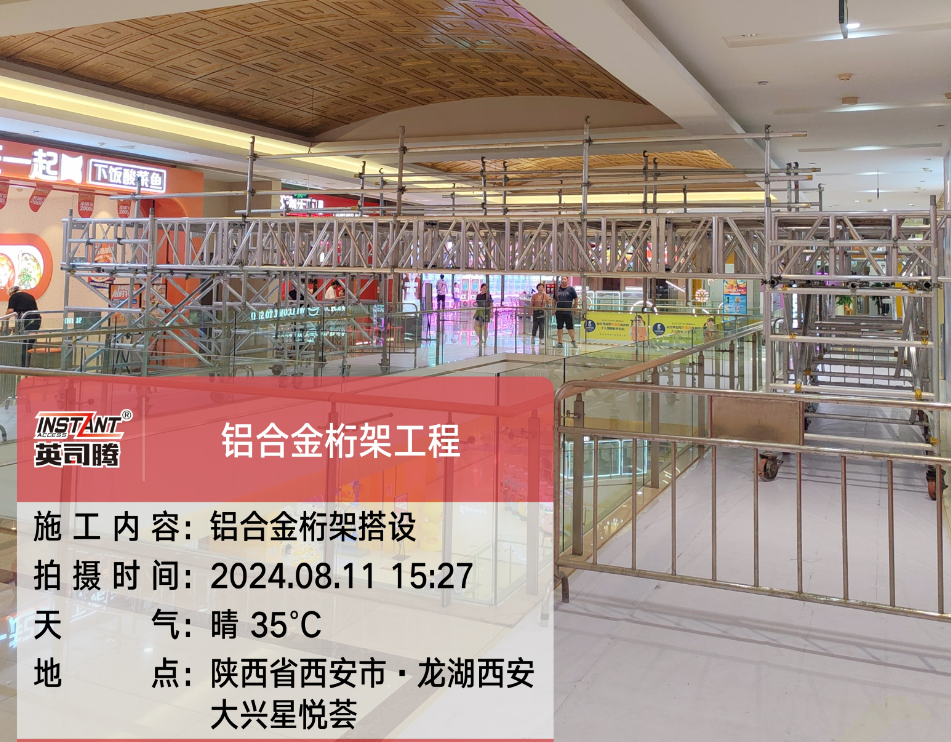
Industrial aluminium scaffolds such as the YANGST SPAN400 and SPAN500 ranges deliver performance that cannot be matched:
Light weight, very low floor loading. The main structure uses high-strength aircraft aluminium such as 6082-T6 and weighs about one third of a conventional steel scaffold, so the load on the mall floor slab is very small. The heavy-duty swivel castors at the base - usually rated at no less than 600 kg each - run on polyurethane tyres, so the tower moves easily while marble floors are protected from scratching and crushing.
Cold expansion and cold pressing instead of welding. High-end commercial work is sensitive to weld defects at inspection. Industrial aluminium scaffolds used in mall renovation generally use the Rib-Grip cold expansion and cold pressing technique: the frames have no welds at all and the rungs carry no diagonal ribs. This mechanical joint gives a pull-out force of up to 6 tonnes, three times that of conventional welding, removing the risk of fatigue failure at a weld, with a service life of 10 to 30 years.
Full compliance with EN 1004 and JGJ 80. Malls are crowded, so protecting people working overhead is critical. Standard quick-assembly aluminium scaffolds are designed strictly to EN 1004 / WAHR and also fit JGJ 80-2016:
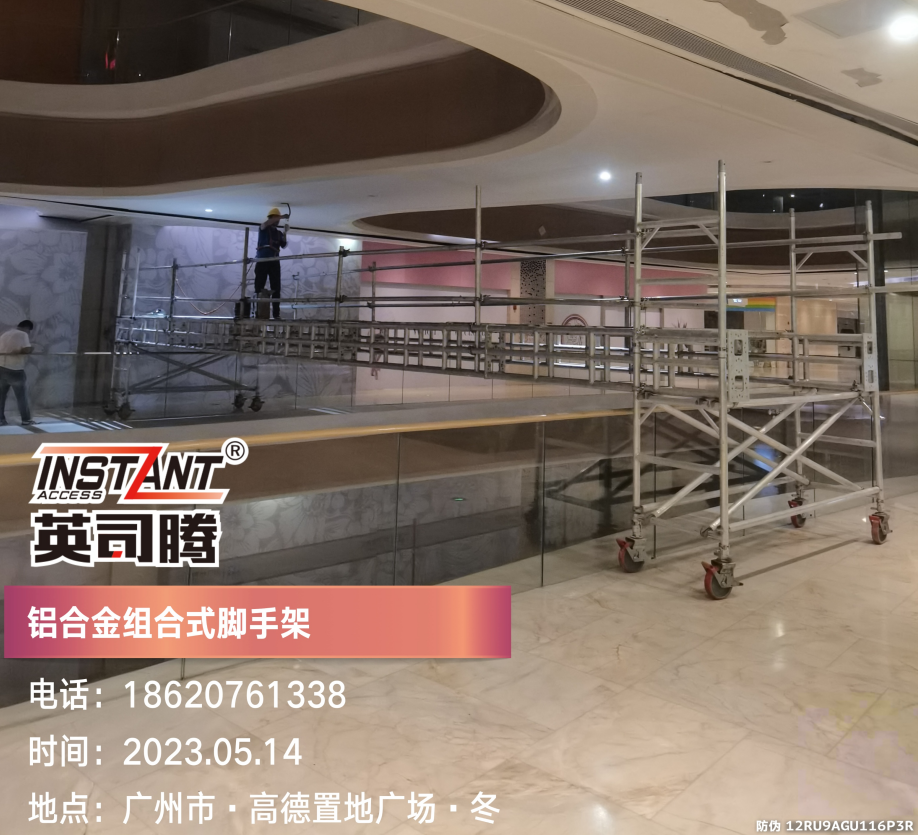
Because commercial space varies so much, aluminium scaffolding can be configured into many tailored engineering solutions from modular parts.
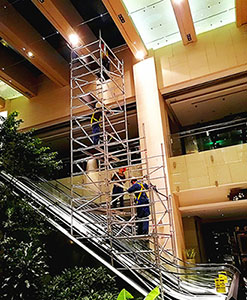
Case 1: very tall mobile towers in atria and under domes. Height is typically 12 m to 20 m or more, with ceiling lighting maintenance or large media walls above. Solution: the YANGST double-width mobile tower range, such as the SPAN400-D, whose Z-bracing gives a very stiff tower. Mechanical adjustable legs with 400 mm to 800 mm of adjustment allow fast, accurate levelling on a slightly sloping or uneven mall floor. The safe working load of one platform level is 360 kg, so several work fronts can operate at once.
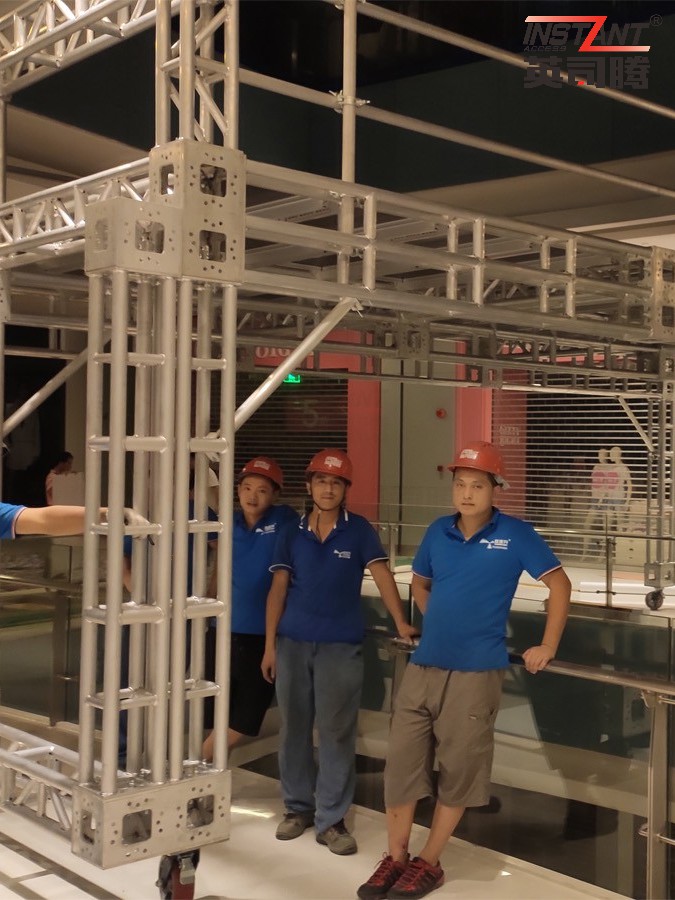
Case 2: obstacle-crossing scaffolds over escalators and features. There is no footing over the escalator, and it is inclined, yet the ceiling above has to be rebuilt. Solution: the four-tube aluminium truss system or an assembled SPAN structure. Using the spanning capability of truss and bridge sections, the scaffold supports sit on sound floor at both sides of the escalator while the span crosses the obstruction. Swivel couplers and swivel clamps adapt to complex building lines.
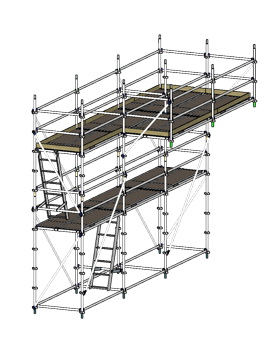
Case 3: full-area aluminium scaffolding on facades and in lobbies. The area is large and several trades - joinery, painting, services - work together. Solution: the aluminium ringlock star system or a modular combined mobile platform. Compared with a conventional full-area steel scaffold, an aluminium full-area scaffold erects five to eight times faster, and the interior stays open so material moves freely. When the work is finished it can be struck in panels or modules and moved on, greatly shortening the mall closure.
Case 4: quick-folding scaffolds for shopfronts and local repairs. Space is tight and the work is often only a few hours at night. Solution: light folding scaffolds such as the TVX or T250. They open and fold in seconds, are compact, and pass easily through passenger lifts, goods lifts and narrow corridors - ideal for refreshing shop windows and fascias.

As commercial space pursues appearance, efficiency and safety, quick-assembly aluminium scaffolding - light, fast, stable and neat - solves the four problems of mall renovation: protecting finished work, spanning large spaces, meeting strict safety rules and living with a compressed programme.
From the obstacle-crossing cantilever scaffolds that played a leading part in the Shenzhen Luohu MixC upgrade to work at height in airports and Universal Studios, YANGST aluminium scaffolding has proved in practice that choosing a standard, well-engineered access platform is both the firm baseline for protecting operatives' lives and the obvious way to raise efficiency and the professional image of modern commercial construction.

WhatsApp:(+86)18620951155
yangst@yangst.com
56 NZRD,Lianhu,Shatou,Panyu,GZ

