WhatsApp:(+86)18620951155
Phone:(+86)020-29065322
Email:yangst@yangst.com
Address:NZRD56,Lianhu,Shatou,Panyu,GZ

Email:yangst@yangst.com

WhatsApp:(+86)18620951155
Phone:(+86)020-29065322
Email:yangst@yangst.com
Address:NZRD56,Lianhu,Shatou,Panyu,GZ
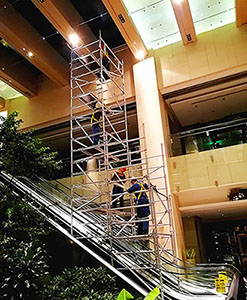
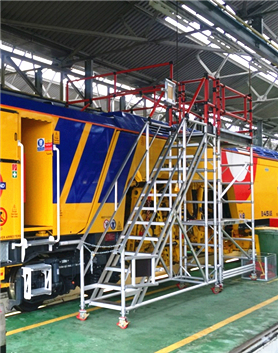
In China's domestic construction market, contractors that follow proper standards have largely eliminated the illegal practice of building frame-type (door) scaffolds above two tiers. Steel tube and coupler mobile platforms took their place - but these are heavy, offer poorer safety and are inefficient, and the problem urgently needs a solution. When such products cause accidents, the damage goes far beyond the contractor and the city's image: it also drags down the reputation of the whole scaffolding industry. That is why a growing number of contractors are switching to mobile quick-assembly aluminium scaffolds, with clear gains in efficiency.
The head of YANGST, a company specialising in the manufacture and sale of aluminium scaffolding, points out: "There is currently no domestic standard or code in China covering mobile aluminium scaffolds, and the market is full of incapable, unqualified producers turning out rough copies. These inferior aluminium scaffolds not only fail industry standards - in material selection and workmanship they fall far behind safe aluminium scaffolding built to EN 1004. So why do they still sell? Low price is the main reason. If a buyer makes price the first criterion, the risk of an accident is there every day."
Industry experts add that customers' unfamiliarity with newer products such as aluminium scaffolding is another major reason buyers and users end up with inferior goods. In their view, a high-quality, safe aluminium scaffold must include the following:
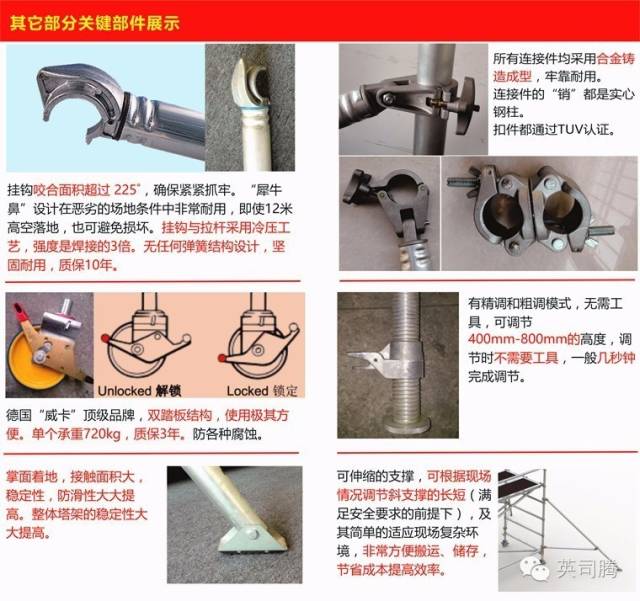
Industry insiders point out that most of the aluminium scaffolding seen today is welded. Welding is a hot process: it introduces internal stress into aluminium, disturbs the internal molecular structure and reduces the strength and durability the material originally had. Production therefore needs strict quality control over welding, otherwise incomplete fusion or heavy residual stress is easy to produce, and a tower erected to a certain height will shake and fail quickly. That is why common aluminium products such as windows and ladders are riveted rather than welded. YANGST's SPAN400 aluminium scaffold takes a different route: YANGST uses cold working instead of welding, giving markedly better strength, stability and durability than an ordinary welded structure.
YANGST aluminium scaffolding, for example, uses cold expansion and cold pressing, which eliminates weld seams entirely, leaves the molecular structure of the aluminium unchanged and guarantees that strength is not reduced. The SPAN400 non-welded range exploits this advantage: the frames and ledgers it produces have a safe threaded surface that is slip resistant and very durable. Every component of the SPAN400 non-welded range is made by cold expansion and cold pressing, so the structure is simple, and combined with other parts it can be designed and built into systematic aluminium scaffold platforms of almost any complex, non-standard shape - greatly improving working efficiency.
Quality component design and workmanship
"The whole tower of the YANGST SPAN400 non-welded range is made by cold expansion and cold pressing, with three times the strength of ordinary welded construction. At the same time the SPAN400 range carries a warranty of up to 10 years, and in normal use it will last 30 years without damage."
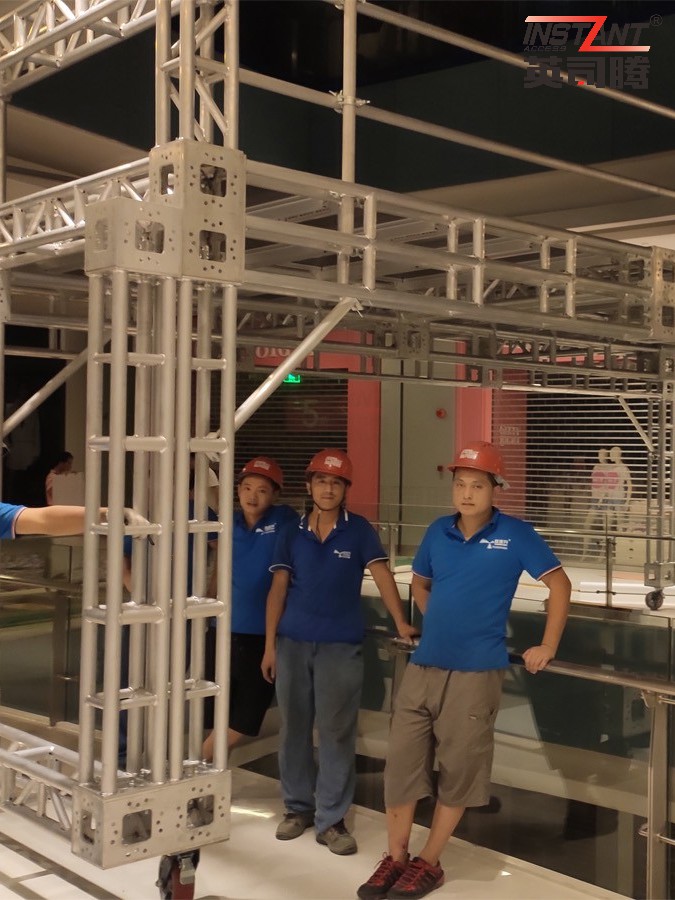
YANGST non-welded components in a multi-purpose assembly
Details decide the outcome. In the view of industry experts, what allows an aluminium scaffold to protect operatives better is precisely the small parts - diagonal outriggers, castors, dedicated guardrail frames and the like.
On the YANGST SPAN400 non-welded range, for instance, components include telescopic "foot-on-the-ground" diagonal outriggers that make the tower safer and more stable. At the base, YANGST aluminium scaffolds use fine-and-coarse adjustable legs plus twin-pedal swivel castors - high quality, safe and durable, and able to meet the demands of different situations.
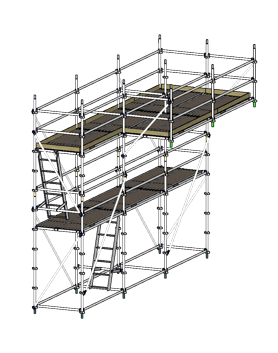
Exploded view of the YANGST SPAN400 range
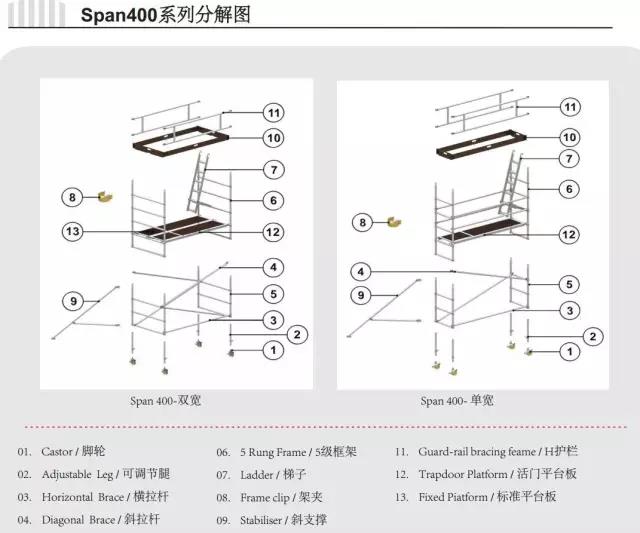
YANGST aluminium scaffolds also have a dedicated guardrail configuration that effectively protects the people working on them.
In summary, a complete aluminium scaffold should include: frames, horizontal ledgers, diagonal braces, guardrail frames, H-guardrails, toe boards, platform decks (at least one deck for every 2 m of height), swivel castors, adjustable legs and diagonal outriggers.
Mobile aluminium scaffolding differs from the fixed steel platforms many sites are used to, and improper use is a major cause of incidents. What should you watch when using aluminium scaffolding?
1. Safety inspection: before erecting or using an aluminium scaffold, check every component and tube to make sure nothing is damaged and that no tube has cracks, crushing or obvious dents from impact.
2. When erecting, make sure the ground on which the aluminium scaffold is erected and moved provides sufficiently stable and firm support.
3. Where outriggers are used, consult the supplier or manufacturer and work under their guidance.
4. When moving an aluminium scaffold, watch for live electrical equipment nearby, such as overhead lines.
5. When moving an aluminium scaffold, everyone must first leave the scaffold, and all loose material must be cleared from the platform and from the ground below.
In the end, avoiding accidents in the scaffolding industry takes effort from every side. Manufacturers must produce safe, high-quality products; buyers must balance value for money against safety and put safety and quality first; and the operatives who actually use aluminium scaffolding protect themselves most directly by using it correctly.

WhatsApp:(+86)18620951155
yangst@yangst.com
56 NZRD,Lianhu,Shatou,Panyu,GZ
